Data management with msg.ORRP
The Open Risk and Reporting Platform (msg.ORRP) offers integrated data management that ensures a consistent and transparent database for risk management and regulatory reporting. This article explains the key aspects of data management and shows how these functions ensure data quality and effectively support users in their daily work.



The Open Risk and Reporting Platform (msg.ORRP) aims to provide banks with integrated data for risk management and regulatory reporting so that all analyses, evaluations and reports are based on uniform and consistent data. The article “Data platform msg.ORRP – integrated and transparent view of data” presented the basic functionality of the platform and the interaction between specialised processes, data platform and reporting. This article explains the platform’s data management in more detail.
Aspects and process steps of data management
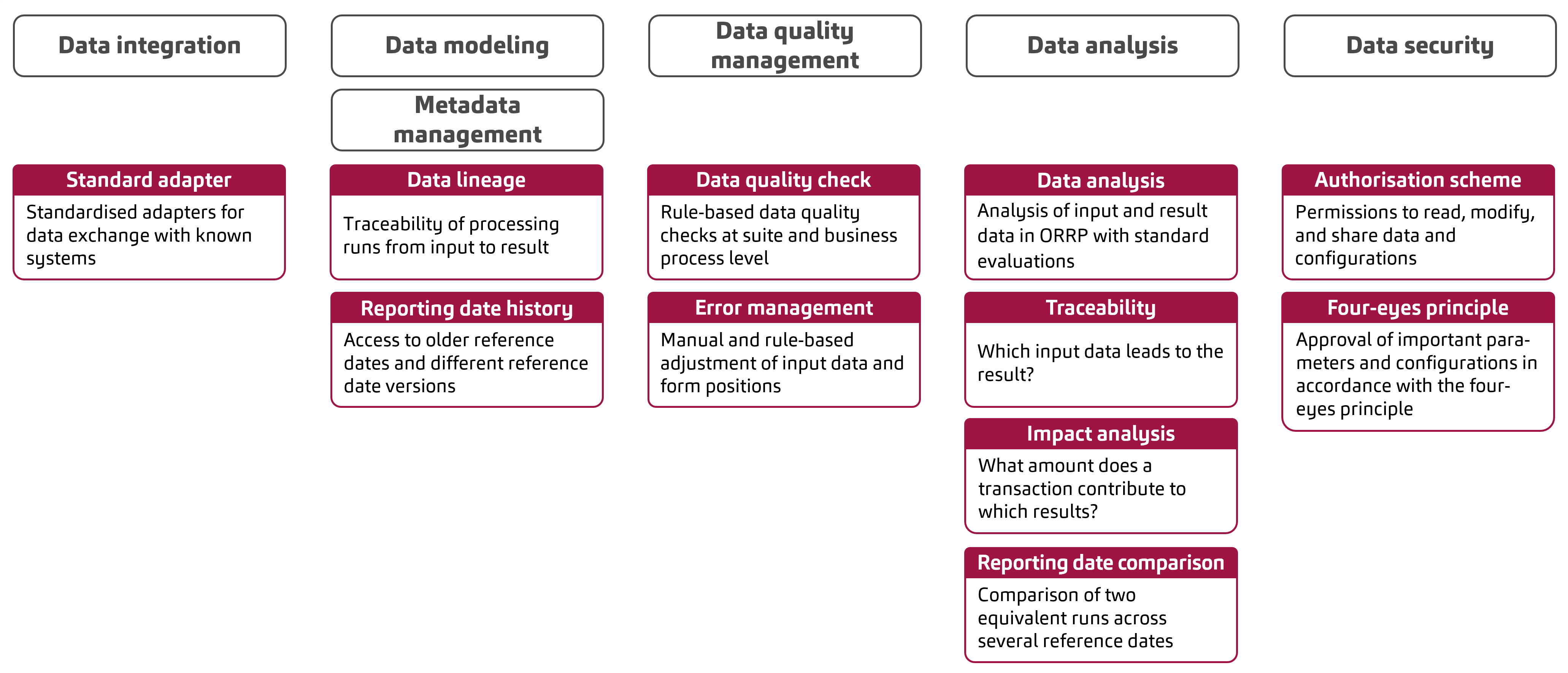
Data management comprises various aspects and process steps, which are shown in the following diagram.
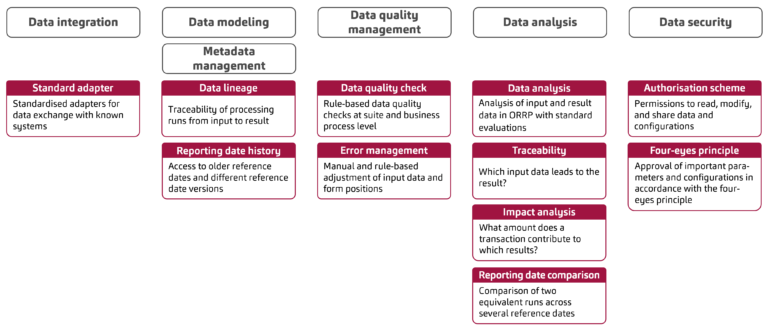
Figure 1: Aspects of data management on the msg.ORRP platform (click on the image to enlarge)
Key aspects of data management
- Traceability and data lineage: Traceability of the origin of results is essential. Data lineage enables seamless traceability of processing runs – a must for regulatory requirements and internal quality assurance.
- Error management and data quality: Rule-based checks at suite and process level and systematic error management ensure data quality. This is the prerequisite for reliable analyses and reports.
- Reporting date comparison and difference analysis: The ability to compare results across different reporting dates supports root cause analyses and the monitoring of changes.
- Authorisation concept and four-eyes principle: The release of important parameters is based on the four-eyes principle, which strengthens governance and compliance.
- Data exports and integration: Standardised adapters and automated exports enable further processing of the analysis results in external systems.
Practical application in everyday work
The aspects of data management described here make everyday work easier for users, for example in the following areas:
How can anomalies in the database be detected?
Flexible grouping and aggregation options facilitate the identification of affected entities and allow you to jump to the respective detailed views.
What changes have occurred between two reporting dates?
Integrated comparison options make it easy to compare two reporting dates. The same flexible analysis options are available as for a single data status.
What basic data was included in the result?
The integrated data lineage functionality can be used to branch link the processing results to the input data. This ensures that users always see the data used in processing, even if a more up-to-date version is available in the meantime.
How can incorrect data be corrected?
Rule-based quality checks can be carried out using the data quality check. The check results, error logs of the processes and the data analysis reports are the starting points for error management, in which both manual and automated, rule-based corrections can be made to the reporting date dataset – traceable and versioned, of course.
The specialised processes of the platform msg.ORRP are based on this verified data set. Reporting forms, risk analyses and forecasts can be created consistently.

Would you like more information?
If you are interested and have any questions about our platform msg.ORRP, please do not hesitate to contact us.






You must login to post a comment.