Open Finance: FIDA taking shape as lighter, consumer-centric regulation
The Financial Data Access (FIDA) regulation enables access to a wide range of financial and customer data held by banks, insurers, and other financial service providers. As FIDA debates resume after the summer break, Denmark is seeking a compromise: the Danish Presidency's non-paper aims to streamline FIDA into a lighter, consumer-focused framework with scope adjustments and more inclusive governance to advance the EU's open finance regulation.



“Back to school” in Brussels also means back to the discussion table on FIDA, the EU’s open finance legislative initiative that took a roller coaster ride earlier this year and has kept industry players, associations and open finance enthusiasts busy debating the pros and cons of opening up Europe’s financial data.
As the Danish Council presidency seems determined to drive FIDA home before the end of 2025, it has reconciled the views of different member states on the regulation and aims to propose balanced changes that would make FIDA a slightly lighter-weight and, in effect, retail-focused regulation.
In a so-called non-paper issued end of August, Denmark puts forward proposals that would exclude certain players from the scope of FIDA, put stronger limits to historical data as well as to the inclusion of terminated and fulfilled contracts. The document also suggests refining the definition of raw data for the purpose of the regulation, as well as proposes to centrally develop minimum standards to avoid excessive scheme-level fragmentation. Finally, it suggests a more inclusive governance for schemes with stronger representation of stakeholders representing consumers and customers.
FIDA data as a key
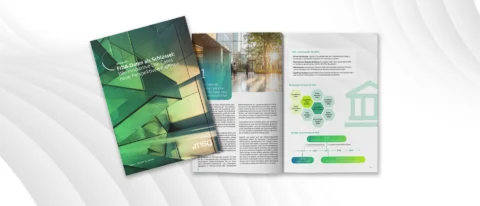
In our latest whitepaper, you can read about five innovative use cases to find out how new business models can not only be conceived using FIDA, but also implemented in practice.
Large corporates and certain types of data holders out of scope
Most notable, but far from unexpected, is the proposed exclusion of large corporates from the customer side of FIDA. Already put forward in a Commission non-paper back in May aiming to simplify the regulation, this idea has received broad consensus across the camps. The reasons are obvious: Corporates have enough market power to gain data access where needed. In addition, their requirements are highly specific and hard to “get right” as part of a broad regulation. The experience of PSD2 shows that its access-to-account APIs are practically irrelevant for corporate players.
The document also proposes a range of exclusions on data holders, among them credit rating agencies. Other institutions, as well, are to fall out of scope – for considerations of proportionality – such as small and non-interconnected investment firms or certain types of pension scheme arrangements: long-tail or niche players with little to add on the overall data pool but a disproportionately high regulatory burden. Further, the paper proposes to exclude issuers of E-Money Tokens and Asset-References Tokens due to the lack of a direct customer relationship. Finally, it opts for a stronger alignment between FIDA and DORA, where smaller entities excluded from DORA should likewise be out of the FIDA scope based on the same rationale.
Reductions in FIDA’s date scope
Next to out-scoping certain entities, the Danish non-paper also looks at limiting the scope of data, both in terms of data history and contracts that are terminated or fulfilled. Putting a time-bound limit to historical data has been in discussion since the Council mandate back in December 2024, which suggested 10 years a maximum limit. The new proposal reduces this to 7 years, with individual schemes forced to set a limit, even though they can decide to extend it. An alternative is discussed as well, where two years would be the limit when FIDA first kicks in, with the time horizon increased yearly.
Also, there is broad consensus among member states that terminated and fulfilled contracts should be out of FIDA’s scope. However, the document also acknowledges the need for exceptions: consider a motor insurance that is renewed on a regular basis – yet with historical data points of high value for the customer.
What is “raw data”?
The limitation of FIDA applying to “raw data” was first introduced by the Council mandate, so as to protect proprietary enrichment of data by data holders from scope (neither the original regulation draft by the Commission, nor the EP’s mandate included such limit). Since then, the definition and delineation of the term has been debated. While the non-paper discusses different approaches to tackle the issue – such as a negative delineation with inferred or derived data or a lex specialis on raw data –, it ultimately proposes a more detailed, direct definition of the term within the FIDA text.
Schemes vs. harmonised minimum standards
The Commission non-paper from May brought an alternative to scheme-lead standardisation onto the table: harmonised minimum standards developed by a European Standardisation Organisation (ESO). This could reduce the market burden of scheme development and prevent fragmentation across markets and industries. The downsides, however, are equally obvious: the smallest common denominator will hardly take into account specificities of particular sub-industries and reduce the potential for FIDA-lead innovation.
The Danish presidency has now suggested to go forward with the development of harmonised minimum standards of an ESO, however on a non-mandatory basis. That is, schemes being developed by the market are free to adopt them but may develop own standards if required. The minimum standards could also act as a fallback where no scheme exists. Important to note: minimum standards are not the equivalent of a scheme – the latter aiming to go beyond mere standards to include a broader set of agreements between participants, as well as their enforcement to ensure seamless and secure data sharing at scale.
A more inclusive approach to schemes
The Danish non-paper also focuses on more balanced governance for financial data exchange systems. The aim here is to ensure that customers and consumers also have sufficient insight into and influence on the development and operation of the schemes. This is to be regulated by a formal, layered mechanism for inquiries and submissions, involving the national supervisory authorities, available throughout the whole lifecycle of a scheme.
Will a FIDA regulation built on compromise do the trick?
Do the directions taken in the Danish Council presidency’s non-paper on FIDA offer any surprises? Not really: Many of the proposals contained, such as the exclusion of large corporates, have been broadly expected by market participants observant of the policy process. The Danish Presidency does what it announced to do: searching for a pragmatic way forward for FIDA by brokering the views of the Commission, European Parliament and those of the member states gathered over the summer.
The outcome, while still subject to further discussions in Brussels, is likely to be a lighter-weight regulation with consumers and small companies in mind, filing off some rough edges to reduce the overall adjustment burden. At the same time, it is mindful of allowing for flexibility and specificality where needed.
Will this compromise approach be enough for FIDA to kick-start the open financial data economy? It is yet to be seen – however, the value of a speedy way forward to create certainty for market participants on the final shape of FIDA is enormous. It will then be on them to align in the scheme setup processes and prove the market’s ability to forge data sharing rules that can result in a win-win scenario for the economy as a whole.
What to do next?
The non-paper provides strong indications as to how some open aspects in the regulation will play out in the end – even though surprises might still wait around the corner. At the same time, there are aspects the non-paper doesn’t address – one of them being implementation timelines. Unless we learn otherwise, market participants’ best guess should be the 24-12-12 months phasing proposed in the Council’s mandate. The fact holds that time is precious in preparing for FIDA, even while the final version of the regulation is still pending.
Contact us to further discuss regulatory intricacies of FIDA, how your company will be impacted, what strategies it can pursue, how it can become FIDA-ready, and what can already be done right now.









You must login to post a comment.